Navigate the competitive German startup landscape with confidence. This guide reveals why MVP (Minimum Viable Product) development is a non-negotiable strategy for de-risking your venture and achieving product-market fit. Learn to validate your idea efficiently, avoid costly mistakes, and build a product that German customers truly want. Discover the smart hybrid approach for balancing speed with the high-quality expectations of the local market. Make informed decisions and invest your resources wisely.
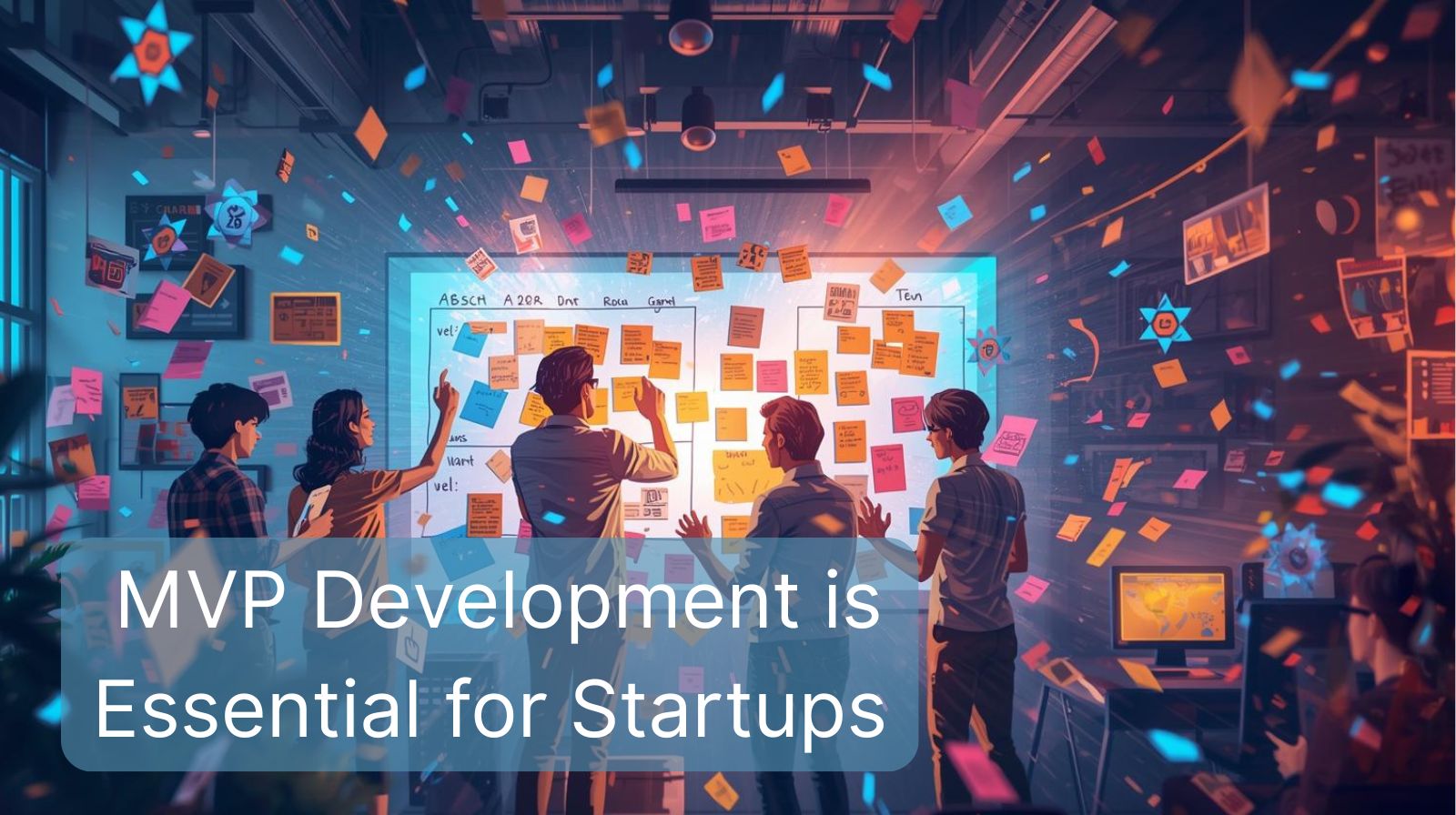
Germany boasts Europe's strongest economy, a world-class engineering reputation, and a thriving venture capital scene. Yet, navigating the path from a brilliant idea to a successful business is fraught with challenges. The fear of failure is real. But what if the biggest risk isn't launching a product that fails, but spending years and a fortune building a product that nobody wants? This is where the disciplined approach of MVP development becomes not just a smart tactic, but an essential strategy for survival and growth in the German market. This guide will deconstruct why the Minimum Viable Product is a critical component of modern startup development and provide you with a clear framework to implement it successfully.
Before we dive into the "why," let's be crystal clear on the "what." An MVP (Minimum Viable Product) is often misunderstood.
Instead, an MVP is a strategic, functional prototype with a very specific goal. It is the simplest version of your product that can be released to a small group of early users to validate your core business hypothesis with the least amount of effort and cost.
The primary purpose is learning, not launching. You are testing fundamental assumptions: Is there a real problem that customers are willing to pay to solve? Does our proposed solution actually work for them? This approach is fundamental to agile startup development.
For German startups, the MVP model aligns perfectly with the local business culture of efficiency, validation, and quality. Here’s a detailed look at the advantages.
German founders often have access to significant funding, but investors demand proof of concept and a clear path to ROI. An MVP in Germany allows you to demonstrate traction and user validation without a massive upfront investment.
Cost-Effective Validation: Test your idea for thousands of euros instead of hundreds of thousands.
Focused Development: Forces your team to identify and build only the core features that deliver the primary value, avoiding feature creep.
The startup landscape is inherently risky. An MVP systematically reduces the biggest risk: building the wrong thing.
Fail Fast, Learn Faster: If your hypothesis is wrong, you discover it quickly and cheaply, allowing you to pivot or iterate before it's too late.
Data-Driven Decisions: Instead of relying on gut feelings, you make decisions based on real user behavior and feedback.
Speed is a competitive advantage. In the fast-paced German tech scene, being first (or early) can be crucial.
Establish a Foothold: Launch your MVP quickly to secure early adopters and gather feedback while competitors are still in extended development cycles.
Iterate in Public: Continuously improve your product based on user input, creating a product that the market truly wants.
German consumers are discerning and value quality. An MVP is the most direct path to ensuring your product meets their high standards.
User-Centric Design: You build a relationship with your earliest users, making them feel part of the development journey.
Validate Demand: Confirms that you are solving a real, painful problem for a specific audience.
No strategy is perfect. It's crucial to understand the potential pitfalls of the MVP model, especially in a quality-conscious market like Germany.
The Challenges of "Minimum"
The Quality Perception Problem: German customers have high expectations. An MVP that is too rudimentary or buggy can create a negative first impression that is hard to overcome.
Oversimplification: For complex B2B or deep-tech solutions, creating a truly "minimum" version that still provides value can be extremely difficult.
Intellectual Property Concerns: Some founders fear that launching an early version might expose their core idea to competitors prematurely.
The alternative to an MVP is the classic "build it and they will come" approach: developing a comprehensive, feature-rich product before any public release.
A Strong First Impression: Launching a fully-formed, polished product can project stability, reliability, and commitment—key factors for winning enterprise B2B clients in Germany.
Comprehensive Experience: Users get the complete vision from day one, without waiting for future updates or features.
Control Over Narrative: You control the entire launch messaging without the noise of public beta feedback.
While a big-bang launch can be tempting, it carries immense risks that are often fatal for startups.
Why This Approach is Risky for Startups
Catastrophic Financial Risk: You invest all your capital into a single, unvalidated vision. If the market doesn't respond, the failure is total.
Dangerously Long Development Cycles: Markets shift. A product that took two years to build might be irrelevant by launch day.
Building in a Vacuum: Without early user feedback, you risk building features based on assumptions, not actual needs, leading to wasted resources.
Your decision between an MVP and a full product launch should be strategic. Ask your team these critical questions.
What is our single most important business hypothesis? What assumption, if proven wrong, would cause our business to fail?
Who are our earliest adopters? Are they tolerant of a "work in progress" in exchange for early access, or do they demand a finished product (common in traditional German industries)?
How do we define "Viable" for our market? What is the absolute minimum level of quality, design, and functionality needed to be taken seriously by our target audience in Germany?
What does success look like for our MVP test? Define clear, measurable metrics (e.g., user activation rate, retention, conversion to paid plan).
What is our pivot strategy? If the MVP feedback is negative, are we prepared to change direction, or are we too committed to our initial idea?
For the German market, a hybrid approach often works best: the Minimum Lovable Product (MLP). This concept reframes the goal from mere viability to creating a small but passionate user base.
An MLP focuses on delivering a delightful and seamless experience for the core features that are included. It's not about having more features; it's about the features you do have being polished, reliable, and truly solving the user's problem. This approach respects the German consumer's expectation for quality while still adhering to the lean startup principle of validated learning.
For the vast majority of startup development projects in Germany, the evidence is clear. The MVP development pathway is the most rational, efficient, and de-risked approach to building a successful business.
Choose an MVP/MLP if: You are validating a new idea, operating with limited resources, and targeting a market where speed and adaptability are advantages.
Consider a full-product launch only if: You have immense funding, are entering a market with extremely high barriers to entry and quality expectations (e.g., certain enterprise software), and have near-certain validation of demand.
The goal is not to build a perfect product in secret. The goal is to build the right product, and an MVP in Germany is the most powerful tool to find that path.
Ready to build a product that the German market actually wants? 👉 Book your free strategy session with our experts at Digital Solution Lab today. Let's find your solution together.
Charlottenburg District Court; HRB 273096 B; Tax ID: 29/262/32902
Managing Director: Adil Sunil | Berlin, Germany
🇩🇪 GDPR Compliant
🔒 SSL Encrypted
⚡ Carbon Neutral Hosting