Introduction
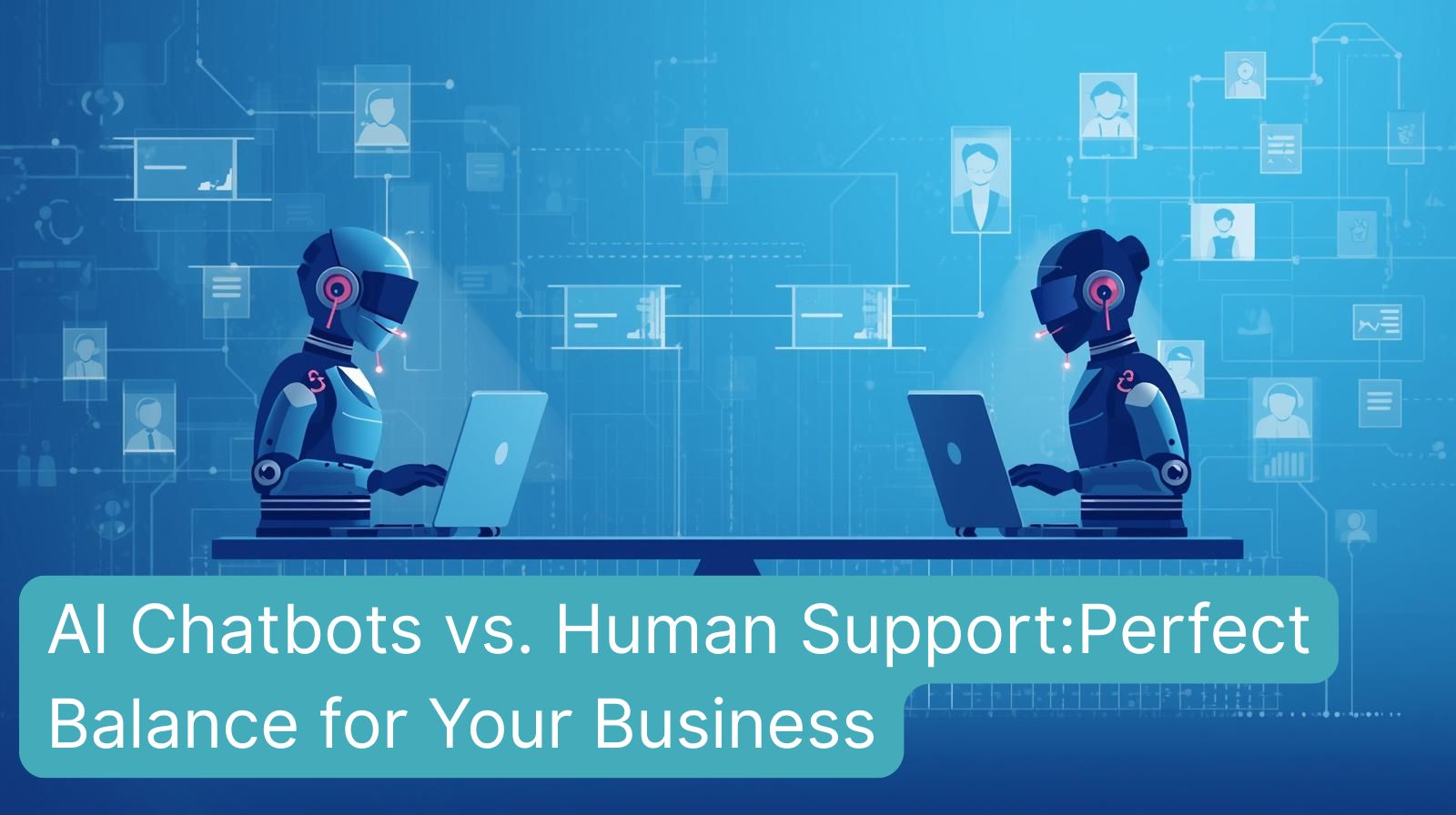
Is your customer support team constantly overwhelmed, struggling to keep up with the 24/7 demands of the modern consumer? You know you need to scale, but the question remains: how? The debate between implementing cutting-edge AI chatbots and retaining the invaluable touch of human support is more relevant than ever. It’s not just about cost; it’s about customer satisfaction, efficiency, and building lasting relationships. This isn't about choosing one over the other. It's about strategically integrating both to create a seamless, superior customer experience. Let's break down the cases for and against each option and outline a clear path forward.
Defining the Key Players
Before we dive in, let's clarify what we're discussing.
- AI Chatbots: These are computer programs powered by artificial intelligence and natural language processing (NLP) that simulate human conversation. Modern intelligent chatbots can understand context, learn from interactions, and execute complex tasks without direct human intervention.
- Human Support: This refers to the traditional model where customer queries are handled by live support agents. This interaction is characterized by empathy, emotional intelligence, and the ability to handle nuanced, unpredictable situations.
For AI Chatbots
The rise of intelligent chatbots is revolutionizing customer service for several compelling reasons.
- 24/7/365 Availability. Unlike human teams, chatbots don’t sleep, take breaks, or observe holidays. They provide instant answers to customer questions at any time of day, from any time zone, significantly improving accessibility.
- Instant Response and Scalability. Chatbots can handle thousands of simultaneous conversations, eliminating wait times. This is invaluable during traffic spikes or product launches, ensuring no customer is left waiting.
- Cost-Effectiveness. Once implemented, chatbots drastically reduce the cost per interaction by automating repetitive, common queries. This frees up your human team to focus on more complex, high-value issues.
- Consistency and Data Collection. Bots provide perfectly consistent answers every time, ensuring all customers receive the same accurate information. They also continuously gather data on customer inquiries, providing invaluable insights for improving products and services.
The Drawbacks of Relying Solely on AI Chatbots
Despite their power, an AI-only strategy has significant limitations in the AI vs human chat dynamic.
- Lack of Genuine Empathy and Emotional Intelligence. A chatbot can simulate sympathy, but it cannot truly feel it. In sensitive situations involving frustration, anger, or confusion, the lack of human empathy can escalate issues and damage customer relationships.
- Struggles with Complexity and Nuance. While advanced, chatbots can still fail when faced with highly unique, multi-layered, or poorly phrased problems. They operate within their programmed boundaries and can provide unhelpful or frustrating responses outside of them.
- Potential for Frustration. If a customer's issue isn't resolved after a few bot interactions, the experience quickly becomes negative. Being stuck in a "chatbot loop" is a primary driver of customer dissatisfaction.
For Human Support
The human touch remains an irreplaceable component of world-class customer service.
- Empathy and Emotional Connection. Humans can listen, understand subtext, express genuine empathy, and build rapport. This emotional intelligence is crucial for de-escalating tense situations and turning a frustrated customer into a loyal advocate.
- Critical Thinking and Creative Problem-Solving. Human agents can think outside the box, connect disparate pieces of information, and devise creative solutions to novel or incredibly complex problems that a bot has never encountered.
- Handling Sensitive and High-Stakes Issues. For complaints, escalated tickets, or high-value client inquiries, the nuanced understanding and accountability of a human agent are non-negotiable. Customers feel heard and valued.
The Drawbacks of Relying Solely on Human Support
A humans-only model also has its own set of challenges in the modern landscape.
- Limited Availability and Long Wait Times. Support teams can't be available 24/7 without massive investment. This leads to queues and frustrated customers who expect instant answers.
- Higher Operational Costs. Salaries, training, benefits, and infrastructure make human support significantly more expensive per interaction than automated solutions.
- Inconsistency. Unlike bots, human performance can vary based on mood, fatigue, or experience level, leading to inconsistencies in the quality of support provided.
How to Choose: 5 Key Questions to Ask
The decision isn't binary. Ask yourself these questions to define your needs.
- What is the nature of our most common queries? Can they be resolved with predefined information (ideal for bots) or do they require complex reasoning (ideal for humans)?
- What are our customers' expectations for response time? Do they need instant answers, or are they willing to wait for a personalized solution?
- How complex and sensitive are our products/services? A financial service has different support needs than an e-commerce store selling t-shirts.
- What is our operational budget? Consider both the initial investment in technology and the long-term cost of human labor.
- What is our primary goal? Is it reducing costs, increasing customer satisfaction scores, or freeing up agents for strategic work?
The Smart Middle Ground: A Hybrid Chat Support Model
The most effective and forward-thinking strategy is not choosing a side, but integrating both. A hybrid chat support system leverages the strengths of both AI and humans, creating a seamless customer journey.
Here’s how it works in practice:
- The intelligent chatbot acts as the first line of defense, greeting the customer and instantly handling frequent, simple queries (e.g., "What's my order status?", "Reset my password").
- If the query is too complex, the bot detects frustration, or the customer simply asks for a human, the conversation is escalated smoothly and instantly to a live agent.
- Crucially, the chatbot provides the human agent with the full conversation history and context, so the customer never has to repeat themselves.
This model offers the best of both worlds: the speed and efficiency of AI with the empathy and complexity-handling of humans.
Conclusion
In the debate of AI vs human chat, the winner is a strategic combination of both. AI chatbots are unparalleled for providing instant, scalable, and cost-effective answers to routine questions. Human support is essential for building trust, handling complexity, and delivering empathetic service. By implementing a hybrid chat support model, you can create a customer service operation that is not only efficient and scalable but also genuinely customer-centric.
Ready to transform your customer support? 👉 Book your free strategy session with our experts at Digital Solution Lab today. Let's find your solution together.