Introduction
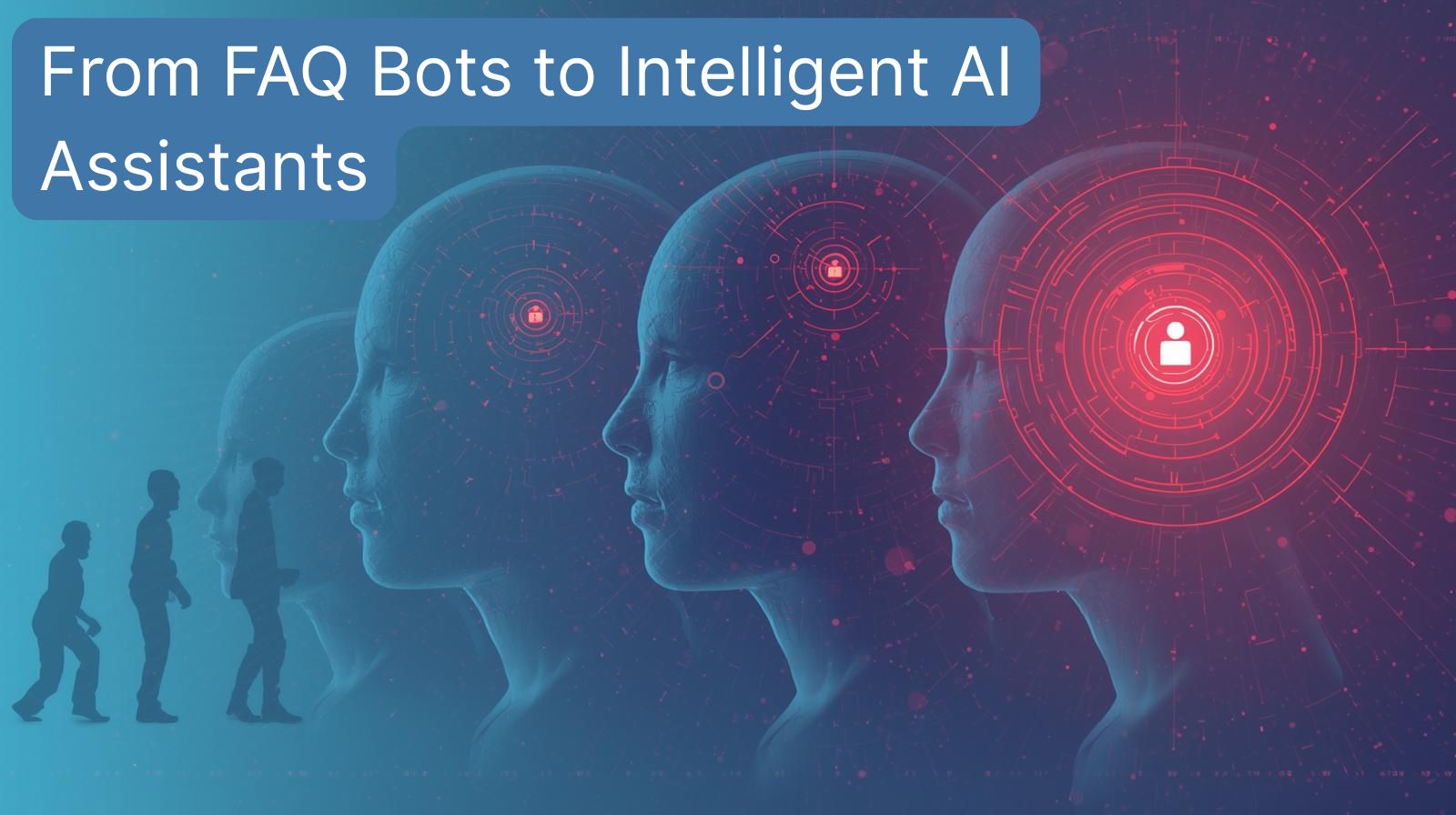
Remember the last time you clicked a website's "chat" button, only to be met with a frustrating loop of pre-programmed questions that couldn't understand your simple request? This experience highlights a critical divide in business automation. Today, chatbot evolution is moving at a breakneck pace, transforming from simple scripted responders into proactive partners. The choice between a traditional FAQ chatbot and a modern AI assistant isn't just about technology—it's about how you connect with customers, empower employees, and drive efficiency. This article will dissect both solutions, providing you with a clear framework to make the strategic investment that aligns with your business goals.
Definitions: Understanding the Key Players
Let's clearly define the two main stages of chatbot evolution.
- FAQ Chatbots (Rule-Based Bots): These are the first generation of automated chat tools. They operate on a predefined set of rules and a decision-tree logic. Think of them as sophisticated, interactive FAQs. They can only respond to specific keywords or phrases they have been programmed to recognize. Their intelligence is limited to their code.
- Intelligent AI Assistants (Conversational AI): This is the new generation. Powered by large language models (LLMs) and Natural Language Processing (NLP), these assistants understand intent, context, and nuance. They learn from interactions, can handle unscripted queries, and often integrate deeply with business systems (like CRMs or ERPs) to perform actions, not just provide answers.
For FAQ Chatbots
For many businesses, starting with a rule-based bot is a logical and effective step.
- Cost-Effective & Quick to Implement: They are relatively inexpensive to build and deploy, making them accessible for small businesses or specific, limited-use cases.
- Predictable & Consistent: You have complete control over the answers. They provide the same accurate, on-brand response every time, which is crucial for compliance or standardized information.
- Excellent for High-Volume, Simple Queries: They perfectly handle repetitive questions like "What are your opening hours?", "What is your return policy?", or "Track my order," freeing human agents from mundane tasks.
- Low Technical Barrier: Building and maintaining them often doesn't require deep AI expertise, allowing marketing or support teams to manage content directly.
The Drawbacks of FAQ Chatbots
However, their limitations become apparent quickly in dynamic environments.
- Fragile and Inflexible: If a user's question deviates slightly from the expected phrasing, the bot fails. This leads to the dreaded "Sorry, I didn't understand that" loop, creating user frustration.
- Zero Context Awareness: They cannot remember the previous sentence in a conversation. Each query is treated in isolation, making complex, multi-step support impossible.
- High Maintenance Overhead: As your products, services, or policies change, you must manually update every related rule and response, which becomes unsustainable.
- No Proactive Capability: They are purely reactive. They cannot analyze user behavior to offer help or make smart recommendations.
For Intelligent AI Assistants
AI assistants represent a quantum leap in capability, moving from cost-centers to value-drivers.
- Human-Like, Contextual Conversations: They understand natural language, typos, and synonyms. They remember the context of the entire conversation, allowing for complex problem-solving and a genuinely helpful dialogue.
- Continuous Learning & Adaptation: They can be trained on your specific knowledge bases, past support tickets, and manuals to provide increasingly accurate and brand-aligned responses over time.
- Action-Oriented and Integrative: They can do things: schedule appointments in a calendar, pull up a customer's account, generate a summary of a support call, or even draft an email—directly within the chat.
- Scalable Personalization: They can analyze user data (with permission) to provide personalized product recommendations, content, or support, elevating the customer experience.
The Case Against Intelligent AI Assistants
The advanced capabilities come with new sets of considerations.
- Higher Initial Investment: Development, training, and integration require a larger upfront investment in terms of budget and technical resources.
- Complexity in Management & "Hallucinations": They require careful oversight. Without proper training data and guardrails, they can generate incorrect or "hallucinated" information, posing a brand risk.
- Data Privacy & Security Scrutiny: Handling complex queries often requires access to sensitive systems and data, necessitating robust security measures and clear data governance policies.
- Change Management: Implementing a powerful AI assistant often requires redesigning business processes and training staff to work alongside the new agent, not just managing a simple tool.
How to Choose: 5 Key Questions to Ask
Use this framework to guide your decision:
- What is the primary goal? (Reduce ticket volume vs. increase sales conversion vs. provide 24/7 complex support?)
- What is the nature of inquiries? (Repetitive & simple vs. unique & complex?)
- What is your budget and resource reality? (CapEx for a transformative tool vs. OpEx for a tactical solution?)
- How integrated does it need to be? (Standalone Q&A vs. connected to CRM, payment, booking systems?)
- What is your risk tolerance? (Need 100% controlled outputs vs. comfortable with managed, evolving intelligence?)
The Smart Middle Ground: A Hybrid Approach
The most effective strategy for many businesses isn't an either/or choice. Implement a hybrid model. Use a robust FAQ chatbot as the first layer to instantly resolve the 60-70% of common, repetitive questions. Then, seamlessly escalate complex, emotional, or high-value queries to either an intelligent AI assistant (for further automated resolution) or directly to a human agent. This approach maximizes efficiency, controls costs, and ensures a premium experience where it matters most.
Conclusion
The evolution of chatbots from rigid FAQ responders to dynamic AI assistants mirrors the evolution of customer and employee expectations. FAQ chatbots remain a powerful, efficient tool for targeted, high-volume, and simple interactions. Intelligent AI assistants, however, are strategic assets that can transform customer service, sales, and internal operations. The right choice hinges on your specific use case, resources, and ambition. For predictable, low-cost automation, start with an FAQ bot. To build a competitive advantage through deep, contextual, and proactive engagement, invest in an AI assistant.
CTA: Ready to transform your customer conversations? 👉 Book your free strategy session with our experts at Digital Solution Lab today. Let's find your solution together.