AI chatbots are revolutionizing patient communication by offering 24/7 support and streamlining administrative tasks. They provide immediate triage, answer common questions, and enhance patient education. However, they are not a silver bullet, facing challenges like potential misdiagnosis and data privacy concerns. The most effective future lies in a hybrid model where AI handles initial screening, freeing up human professionals for complex, empathetic care. This approach augments the healthcare system without replacing the essential human touch.
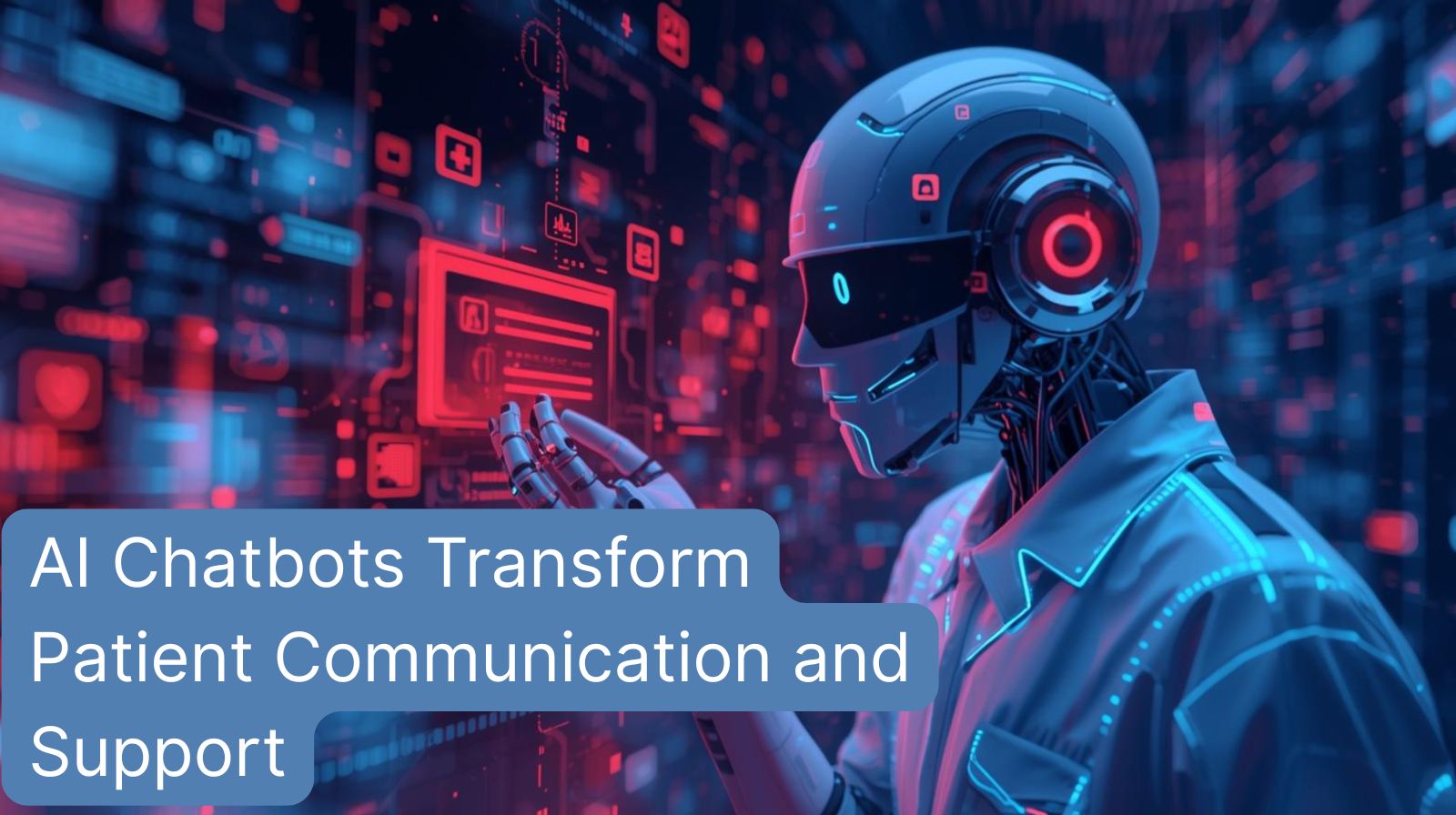
Imagine it's 2 AM. Your child has a fever, and you're filled with anxiety. Do you rush to the emergency room, or is it something that can wait until morning? For many, this scenario triggers a spiral of stress and uncertainty. This is just one of the countless friction points in the patient journey. Today, the healthcare landscape is undergoing a quiet revolution, powered by artificial intelligence. Medical AI chatbots are stepping out of science fiction and into clinical reality, promising to reshape how we access information, manage our health, and communicate with providers. But are these digital assistants a true panacea or just another piece of tech hype? Let's dissect the potential and the pitfalls of integrating healthcare chatbots into the core of patient care.
Before we dive in, let's clarify the key concepts. In the context of this article, we are discussing sophisticated, AI-driven software applications designed to simulate conversation.
The adoption of medical AI chatbots is driven by a compelling set of advantages for patients, providers, and the entire healthcare system.
The healthcare system doesn't operate on a 9-to-5 schedule, and neither do health concerns. Healthcare chatbots provide instant, around-the-clock access to reliable medical information. They can perform initial symptom checks, offer guidance on the appropriate level of care (e.g., self-care, primary care, ER), and direct users to relevant resources, alleviating anxiety and reducing unnecessary clinic visits.
A significant portion of healthcare professionals' time is consumed by repetitive tasks. Chatbots can automate appointment scheduling, send medication reminders, handle prescription refill requests, and answer common billing questions. This patient support function frees up human staff to focus on more complex, high-value patient interactions.
Informed patients are empowered patients. Chatbots can deliver personalized educational content about conditions, treatments, and lifestyle modifications. They can conduct follow-ups post-discharge, check on recovery progress, and ensure patients adhere to their care plans, leading to better long-term health outcomes.
Despite the promise, the integration of AI into sensitive healthcare domains is not without its significant challenges and risks.
The most significant concern is the potential for error. An AI model is only as good as its training data and algorithms. If a chatbot fails to identify a critical symptom or provides incorrect advice, the consequences could be severe. Who is liable when a chatbot makes a mistake? This remains a complex legal and ethical gray area that institutions must navigate carefully.
Medical AI chatbots handle incredibly sensitive Protected Health Information (PHI). A data breach in such a system could be catastrophic. Ensuring robust, compliant security (like HIPAA in the US or GDPR in Europe) is non-negotiable and technically challenging, raising valid concerns about patient privacy.
The " empathy Gap" in Patient Care
Healthcare is fundamentally human. It involves empathy, nuance, and emotional support—qualities that even the most advanced AI cannot genuinely replicate. Over-reliance on chatbots could lead to a depersonalized care experience, leaving patients feeling like numbers in a system rather than cared-for individuals.
Let's now consider the alternative—the traditional, human-centric model of care.
The value of a seasoned healthcare professional is immeasurable. They bring years of experience, intuition, and emotional intelligence to the table. They can read non-verbal cues, understand complex psychosocial contexts, and build trusting, therapeutic relationships with patients. This human connection is often a critical component of the healing process itself.
The traditional model is buckling under pressure. Doctors are overworked, leading to burnout. Appointment slots are short, and waiting times can be long. Human resources are finite and expensive, making it difficult to provide continuous, scalable patient support to a growing and aging population. Administrative inefficiencies can also consume time that should be spent with patients.
This isn't about picking one over the other. It's about finding the right balance. Before implementing a healthcare chatbot, ask these critical questions:
The most effective future of healthcare lies not in a choice between human and machine, but in a synergistic partnership. A hybrid model leverages the strengths of both.
In this model, a medical AI chatbot acts as the first line of defense—a powerful tool for triage, data collection, and administrative handling. It can gather a patient's initial history and symptoms before an appointment, giving the doctor a head start. Then, for complex diagnoses, emotional support, and critical decision-making, the conversation is seamlessly escalated to a human professional. This approach maximizes efficiency without sacrificing the essential human touch.
Healthcare chatbots and medical AI chatbots are transformative tools for scalable patient support, but they are not a replacement for human clinicians. The ideal scenario is one of augmentation.
By strategically deploying AI to handle repetitive tasks, we free up our invaluable human professionals to do what they do best: provide compassionate, complex, and personalized care.
1/1/2026
12/30/2025
12/19/2025
12/19/2025
12/2/2025
Charlottenburg District Court; HRB 273096 B; Tax ID: 29/262/32902
Managing Director: Adil Sunil | Berlin, Germany
🇩🇪 GDPR Compliant
🔒 SSL Encrypted
⚡ Carbon Neutral Hosting