Introduction
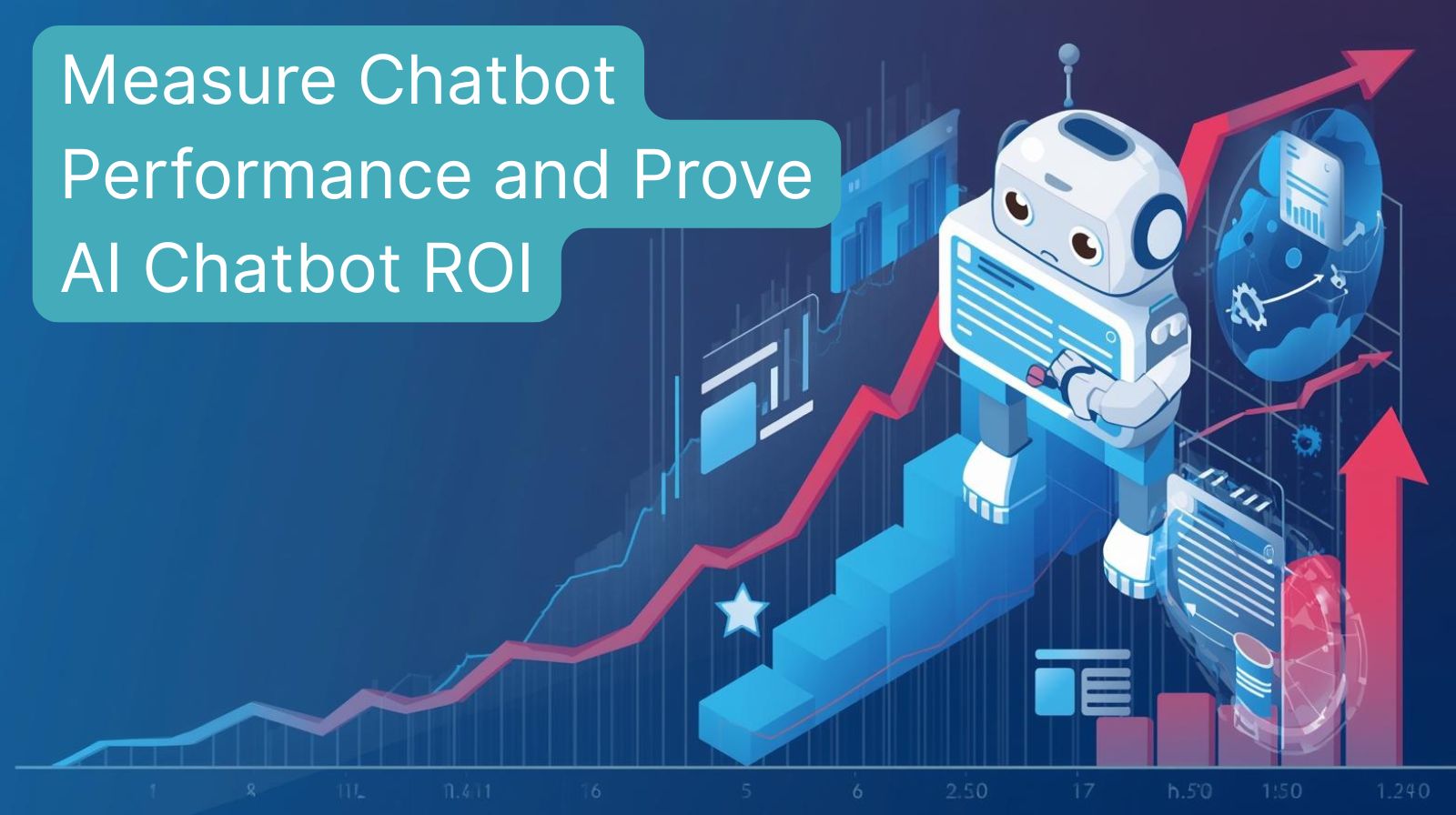
You’ve invested in an AI chatbot. It’s live on your website, handling conversations around the clock. But a critical question remains: is it actually working? Is your chatbot driving value, or is it just a costly digital novelty? For business leaders, gut feeling isn't enough. You need hard data to justify the investment and guide your strategy. This is where chatbot analytics moves from being a nice-to-have feature to an absolute necessity. In this guide, we’ll break down exactly how to measure chatbot performance and, most importantly, calculate the tangible AI chatbot ROI for your business.
Defining Our Key Terms: Chatbot Analytics 101
Before we dive into the numbers, let's clarify what we're measuring.
- Chatbot Analytics: This is the process of collecting, measuring, and analyzing data from your chatbot's interactions. It’s the dashboard that tells you everything about how your chatbot is behaving and how users are engaging with it.
- Chatbot Performance: This refers to the effectiveness and efficiency of your chatbot. It answers questions like: Is it understanding users? Is it resolving their issues quickly? Key metrics here include resolution rate, containment rate, and average handling time.
- AI Chatbot ROI (Return on Investment): This is the ultimate bottom-line metric. It quantifies the financial value generated by your chatbot against the total cost of implementation, maintenance, and development. Proving AI chatbot ROI is about translating performance data into dollars and cents.
Why should you dedicate time and resources to this? The benefits are profound.
- Data-Driven Optimization: Analytics reveal exactly where users get stuck, what questions they ask most, and where the chatbot fails. This allows you to continuously train and improve your AI, making it smarter and more valuable over time.
- Proving Business Value: Solid chatbot performance data allows you to demonstrate concrete savings (e.g., reduced support ticket volume) and revenue generation (e.g., qualified lead capture), securing ongoing executive buy-in and budget.
- Enhanced Customer Experience: By understanding conversation flows, you can identify and fix friction points. A well-optimized chatbot leads to faster resolutions and happier customers, boosting overall satisfaction and loyalty.
- Uncover User Insights: Chat logs are a goldmine of unsolicited customer feedback. You learn about customer pain points, product questions, and emerging trends directly from their unfiltered language.
The Drawbacks of a Surface-Level Analysis
Ignoring a deep analytical dive comes with significant risks.
- The "Vanity Metric" Trap: It's easy to get excited about high conversation counts, but if those chats don't resolve issues, they are meaningless. Focusing on the wrong metrics creates a false sense of success.
- Resource Drain: Without proper analysis, a poorly performing chatbot can create more work for your human team, who must constantly step in to clean up its mistakes, negating the efficiency benefits.
- Customer Frustration and Brand Damage: An unoptimized chatbot that gives wrong answers or loops endlessly actively frustrates users, potentially driving them away from your business.
- Inability to Justify Investment: If you can't draw a clear line from chatbot activity to financial outcomes, the project becomes vulnerable during budget reviews. You’ll struggle to prove AI chatbot ROI.
Calculating AI Chatbot ROI
Moving from performance to financials is where you win the boardroom.
- Clear Justification for Budget: A positive ROI calculation is the most powerful argument for initial investment or continued funding. It transforms the chatbot from a "cool tech project" into a strategic business asset.
- Strategic Alignment: Calculating ROI forces you to align your chatbot's goals with core business objectives, such as reducing operational costs in the support department or increasing sales conversion rates.
- Informed Decision-Making: Understanding your ROI helps you make smarter decisions about scaling the chatbot to other departments (e.g., HR, Sales) or investing in more advanced AI capabilities.
The Case Against a Simplistic ROI Calculation
However, calculating ROI isn't always straightforward.
- Intangible Benefits are Hard to Quantify: How do you put a precise dollar value on 24/7 availability, improved customer sentiment, or brand perception? These are real benefits that often get left out of simplistic calculations.
- Attribution Can Be Complex: If a chatbot qualifies a lead that later closes via a sales rep, how much of the revenue credit does the chatbot deserve? Clear attribution models are needed.
- Focusing Solely on Cost-Savings is Short-Sighted: The biggest value of a modern AI chatbot may be in revenue generation and customer retention, not just in reducing headcount. A narrow focus underestimates its true potential.
How to Choose: 5 Key Questions to Ask Before You Start
Before you dive into the data, use this framework to define your strategy.
- What is our primary goal? (e.g., Cost reduction, lead generation, customer support?)
- Which metrics directly reflect that goal? (e.g., Containment rate for cost reduction, qualified leads captured for sales.)
- Do we have a system to track both quantitative and qualitative data? (e.g., Metrics dashboards + conversation transcript reviews.)
- Who is responsible for acting on these insights? (e.g., A dedicated chatbot manager, the marketing team, the support lead?)
- What is our benchmark for success? (e.g., A 25% reduction in tier-1 support tickets within 6 months.)
The Smart Middle Ground: A Hybrid Measurement Model
The most successful companies don't choose between performance and ROI; they blend them. Adopt a balanced scorecard approach that tracks four key areas:
- Operational Efficiency: Metrics like Containment Rate, Average Handling Time, and Ticket Deflection.
- Customer Success: Metrics like CSAT (Customer Satisfaction), Resolution Rate, and User Feedback.
- Business Impact: The core AI chatbot ROI metrics, including Cost Savings and Revenue Influenced.
- Conversation Quality: Qualitative analysis of conversation flows, intent recognition accuracy, and fallback rates.
This model ensures you are not just efficient, but also effective, delivering both financial value and a superior customer experience.
Conclusion
Measuring chatbot performance and AI chatbot ROI is not a one-time task but an ongoing cycle of analysis, optimization, and proof. A chatbot without analytics is a black box—a cost center with unproven value. By defining clear goals, tracking the right metrics, and adopting a hybrid measurement model, you can transform your AI assistant from a simple tool into a strategic powerhouse that drives efficiency, delights customers, and delivers a compelling return on investment.
Ready to unlock the true potential of your AI assistant? 👉 Book your free strategy session with our experts at Digital Solution Lab today. Let's find your solution together.